
The “Hockey Puck” Problem If you’ve been gluten free for a while, you know the struggle of finding a decent Gluten Free English Muffins. Most of the time, you’re forced to pay $7 for a pack of four frozen Gluten Free English Muffins that are dry, crumbly, and have the texture of a dense brick. You toast them, and instead of getting those beautiful golden edges, they just get harder.
I was tired of settling for “bread disks,” so I set out to create a recipe that actually behaves like the classic Thomas’ brand we all grew up with. This easy gluten free English muffin recipe delivers exactly what’s been missing: a soft, airy center, a lightly crisp exterior, and, most importantly, those iconic nooks and crannies that are made for soaking up butter.
Bakery Quality on a Budget You don’t need a professional griddle or fancy rings to make these at home. Using simple pantry staples and my “Fork-Split” technique, you can create bakery style Gluten Free English Muffins that are perfect for breakfast sandwiches, eggs benedict, or just a simple morning toast. They are freezer friendly, meal prep approved, and cost a fraction of the price of the store-bought stuff.
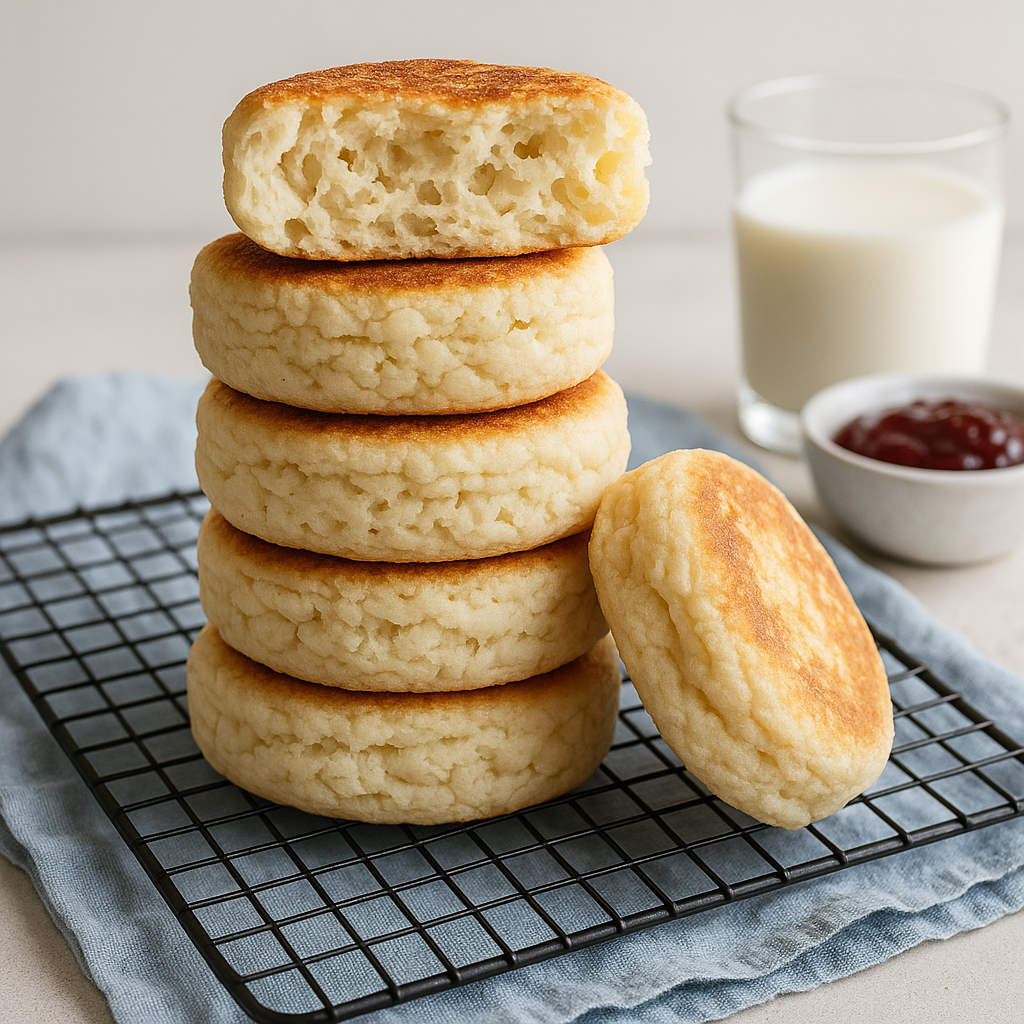
Why These Gluten Free English Muffins Are a Breakfast Game Changer
- The “Nook & Cranny” Guarantee: We’ve engineered this batter to create those iconic air pockets that hold onto pools of melted butter and jam. No more flat, dense muffins—these have the authentic “Thomas-style” texture you’ve been missing.
- “Pantry-Staple” Simplicity: You don’t need a specialized bread machine or a dozen different starches. This recipe uses simple, accessible ingredients to get a bakery-quality result right on your stovetop.
- The Ultimate Meal-Prep Hack: In the US, morning time is precious. These are 100% freezer-friendly. I recommend making a double batch, “fork-splitting” them, and freezing them in a stack. You can go from “frozen” to “toasted and golden” in less than 3 minutes.
- Endless Versatility: While they are the star of any Eggs Benedict or breakfast sandwich, they are sturdy enough to hold up to heavy toppings like avocado or even as a mini-pizza base for a quick lunch.
Ingredients For Gluten Free English Muffins
- 2 ¼ cups (315 g) all purpose gluten free flour blend (choose one with rice flour, designed for yeast breads)
- 2 ¼ teaspoons xanthan gum (skip if your flour blend includes it)
- ¼ cup (30 g) tapioca starch (plus more for sprinkling)
- 1 tablespoon (12 g) granulated sugar
- 2 teaspoons (6 g) instant yeast (rapid rise or bread machine yeast)
- 1 ½ teaspoons kosher salt
- 1 ½ cups (12 fl oz) warm milk, ~95°F/35°C (or dairy-free milk)
- ½ teaspoon apple cider vinegar
- 1 egg white (25 g), room temperature
- 1 tablespoon (14 g) neutral oil (canola, vegetable, or grapeseed)
How to Make Gluten Free English Muffins
1. Mix the Dough
Add all ingredients to a stand mixer fitted with a paddle attachment (or food processor with plastic blade). Beat well until the dough is smooth. It will be sticky and wet, that’s normal.
2. Chill Overnight
Transfer dough to a sealed container and refrigerate for at least 12 hours. This allows the flour to absorb moisture and the yeast to develop flavor.
3. Shape the Gluten Free English Muffins
Lightly dust your hands and work surface with tapioca flour. Gently shape dough into round disks, smoothing the outside without kneading. If preferred, use English muffin rings (or 1 inch strips cut from clean cans) for a uniform shape.

4. Cook on the Stovetop
Preheat a covered skillet or griddle over medium low heat. Place muffins inside rings or directly on the pan. Cover and cook for about 6–8 minutes per side, until golden brown and cooked through.
5. Cool & Split
Let muffins cool slightly, then use a fork to split them open (never a knife!). This creates the perfect “nooks and crannies” for butter and jam.
Pro Tips for Success
- Flavor boost: An overnight rise in the fridge creates better taste.
- Dairy free option: Use almond, oat, or soy milk for a vegan friendly version.
- Freezer friendly: Once cooled, slice and freeze. Toast straight from frozen.
- Shape hack: No rings? Just shape by hand—rustic is delicious too.
How to Serve Your “Nook & Cranny” Masterpiece , Gluten Free English Muffins .
Once you’ve nailed that perfect griddle-toasted crust, the fun really starts. Because these are sturdier and more flavorful than store-bought versions, you can get much more creative with your toppings:
- The “Ultimate DIY McMuffin”: Layer a fried egg, a slice of sharp cheddar cheese, and crispy bacon (or avocado for a California twist). Unlike other GF breads, these muffins won’t fall apart mid-bite—they have the perfect “structural integrity” for a heavy breakfast sandwich.
- The “Classic Melt”: There is nothing better than a hot muffin toasted until the edges are dark golden brown, then topped with salted butter and strawberry jam. The butter pools into those nooks and crannies for the ultimate nostalgic bite.
- The “Gourmet Brunch” Base: Use these as the foundation for a world-class Eggs Benedict. They provide a stable, toasted base that can hold up to the weight of Canadian bacon and rich, buttery Hollandaise sauce without getting soggy.
- The Savory “Soup Dipper”: Don’t limit these to breakfast! Toast a muffin with a bit of garlic butter to serve alongside a warm bowl of tomato soup or a fresh summer salad. They are the perfect “light meal” companion.
FAQs About Gluten Free English Muffins
Q: Do these taste like regular English muffins?
Yes! With the right flour blend, they’re soft, chewy, and flavorful—just like the originals.
Q: Can I make them without xanthan gum?
If your flour blend already has xanthan gum, you can skip it. Without it, the texture may be more crumbly.
Q: How do I store them?
Keep in an airtight container at room temp for 1–2 days, or refrigerate up to 5 days. For longer storage, freeze and toast when needed.
This is the most important section for keeping readers on your page. In the US, the “Thomas’ English Muffin” standard is the goal, and if a reader’s muffin looks like a regular bun, they’ll think the recipe failed.
Adding this troubleshooting guide makes you look like a master baker who has seen it all.
See More gluten free breakfast recipes :
Oat Flour Waffles | Easy Gluten Free Breakfast Recipe
Gluten Free Pumpkin Pancakes | Fluffy, Cozy, and Easy
Gluten Free French Toast (Crispy Outside, Soft Inside!)
Troubleshooting: Why Didn’t My Gluten Free English Muffins Have Holes?
If your English muffins came out looking more like a dinner roll than a “nook and cranny” masterpiece, don’t panic! Gluten free baking is a science, and usually, it’s one of these three common culprits:
1. The Dough was Too Thick (The #1 Mistake)
In the gluten-free world, we are often tempted to keep adding flour until the dough is easy to handle. Don’t do it! * The Fix: English muffin dough should be more of a thick, sticky batter than a kneadable dough. If the batter is too dry, there isn’t enough moisture to create the “steam bursts” that push the dough apart to create those air pockets. Next time, trust the stickiness!
2. You Used a Knife (The “Nook Killer”)
If you take a sharp knife and slice your muffin in half, you are literally “sealing” the interior. The blade smoothes over the air pockets, making the surface flat and bready.
- The Fix: Always use a fork. Poke the prongs into the side of the muffin all the way around the center and gently pry it open. This preserves the jagged, uneven texture that captures all that melted butter.
3. The Griddle Wasn’t Hot Enough
Those “nooks” are created by steam. When the wet batter hits a hot surface, the moisture turns to steam instantly and tries to escape, blowing holes into the crumb.
- The Fix: Make sure your skillet is preheated. If it’s too cold, the muffin will just slowly dry out instead of “springing” up. You want to hear a gentle sizzle the moment the batter hits the pan.
4. Your Yeast was “Sleepy”
If your muffins didn’t rise at all, they’ll be dense “hockey pucks” without any room for holes.
- The Fix: Always check your yeast in the lukewarm water/sugar mix first. If it doesn’t get foamy and bubbly within 5–10 minutes, your yeast is likely dead. Toss it and start with a fresh packet for a guaranteed rise.
Notes: How to Master the “Gluten Free English Muffins“
1. The Cornmeal Secret (The “Thomas” Look)
If you look at a traditional English muffin in the US, the bottom is always covered in a light, crunchy dust.
- The Secret: Sprinkle coarse cornmeal (or grits) on your griddle and on top of the muffins before cooking. This isn’t just for flavor; it prevents the wet dough from sticking and creates that iconic, sandy texture that makes an English muffin feel authentic.
2. The “Fork-Split” Rule
This is the most important rule in the English muffin handbook.
- Experience Tip: Never, ever use a knife to slice these! A knife shears through the air pockets, sealing them shut and ruining your “nooks and crannies.” Use the tines of a fork to poke holes all the way around the center, then gently pull it apart. This creates a jagged surface that captures pools of melted butter.
3. Skillet vs. Oven
Unlike most breads, English muffins are “griddle cakes.”
- The Tech Tip: Cook them on a low-medium heat skillet for about 7–10 minutes per side. If they are browning too fast but still feel “doughy” in the middle, pop them into a 350°F (180°C) oven for 5 minutes to finish. This ensures a fully set crumb without a burnt crust.
4. Storage & The “Toaster Resurrection”
Gluten-free bread is notorious for going stale quickly.
- The Strategy: These are best served toasted. If you aren’t eating them immediately, slice them (fork-split!) and freeze them. Toasting them directly from the freezer actually helps recreate that “fresh-baked” moisture inside while crisping up the jagged edges.
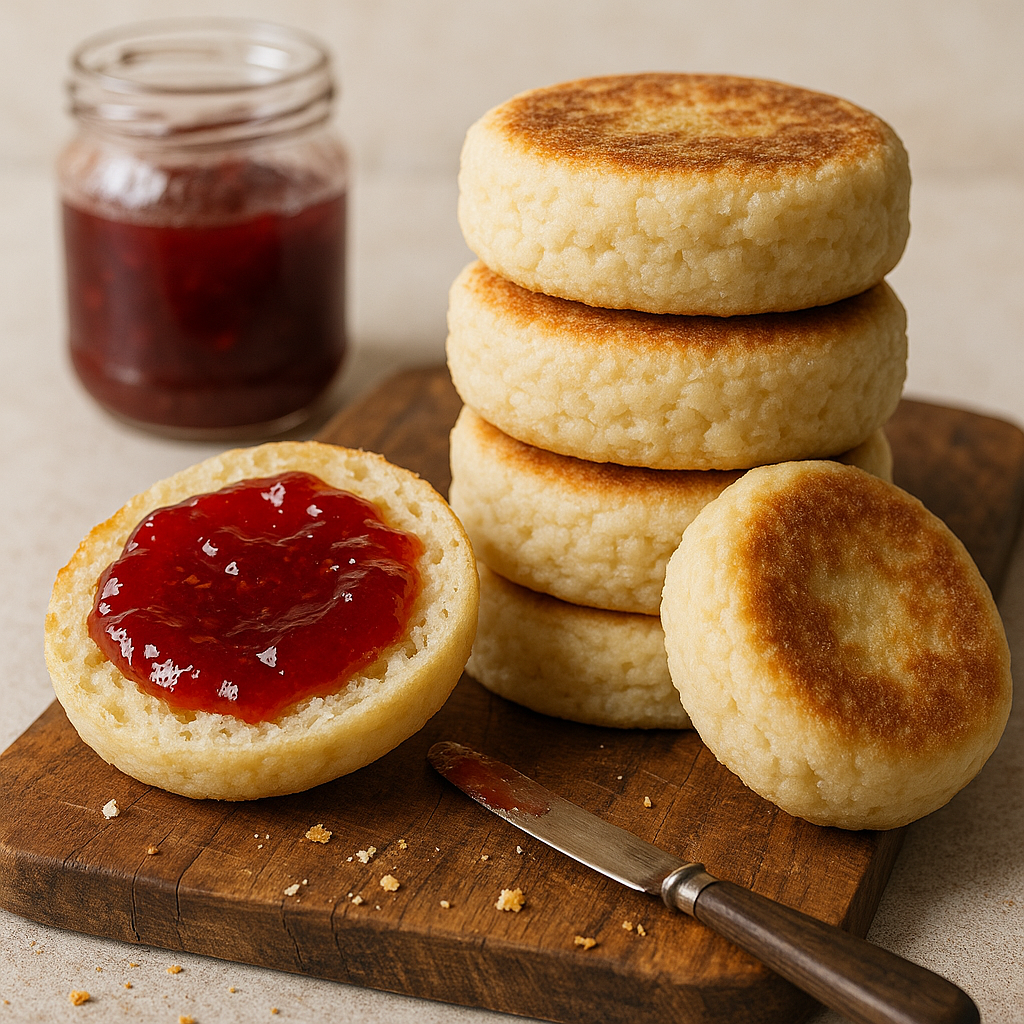
The Final Toast: Your New Morning Staple
These homemade Gluten Free English Muffins are proof that you don’t have to settle for the “frozen hockey pucks” from the grocery store. Whether you’re piling them high with eggs and bacon for a weekend brunch or simply enjoying a quiet morning with a perfectly toasted, butter-soaked muffin, this recipe delivers that soft, airy texture you’ve been missing.
Not only are they budget-friendly, but they give you the freedom to enjoy a “real” breakfast sandwich again. Once you see those butter-filled nooks and crannies for yourself, you’ll never go back to the pre-packaged stuff!
Let’s See Your Nooks & Crannies!
I want to hear about your “breakthrough” moment with these Gluten Free English Muffins.
- How do you top yours? Are you a classic butter-and-jam lover, or do you go for the full Eggs Benedict experience? Leave a comment below and let’s swap serving ideas!
- Show off that fork-split: If you captured that perfect jagged texture, tag me in your photos on Instagram. I love seeing the #GFsnack community bring these bakery classics to life in their own kitchens!
Happy toasting, and enjoy your better-than-store-bought breakfast!