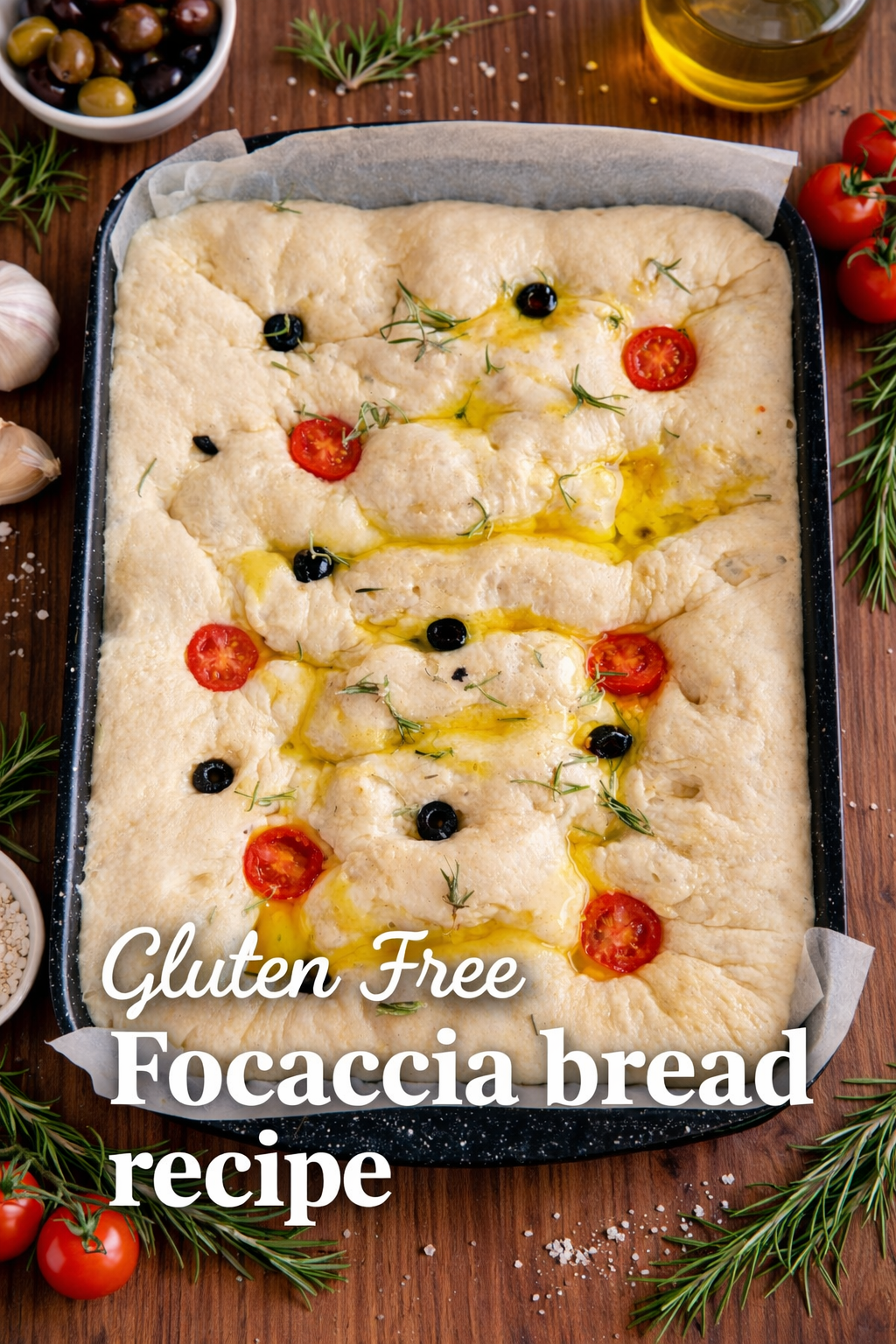
If you’ve ever baked gluten free focaccia bread that turned out dry, flat, or heavy, you’re not alone.
Gluten free dough behaves differently, and focaccia needs gentle hydration, good yeast, and time.
This recipe gives you a soft, airy inside, a lightly crisp olive oil top, and a calm method that works, even if you’re new to gluten free baking.
No kneading.
No strange ingredients.
Just reliable focaccia you’ll feel proud to bring to the table
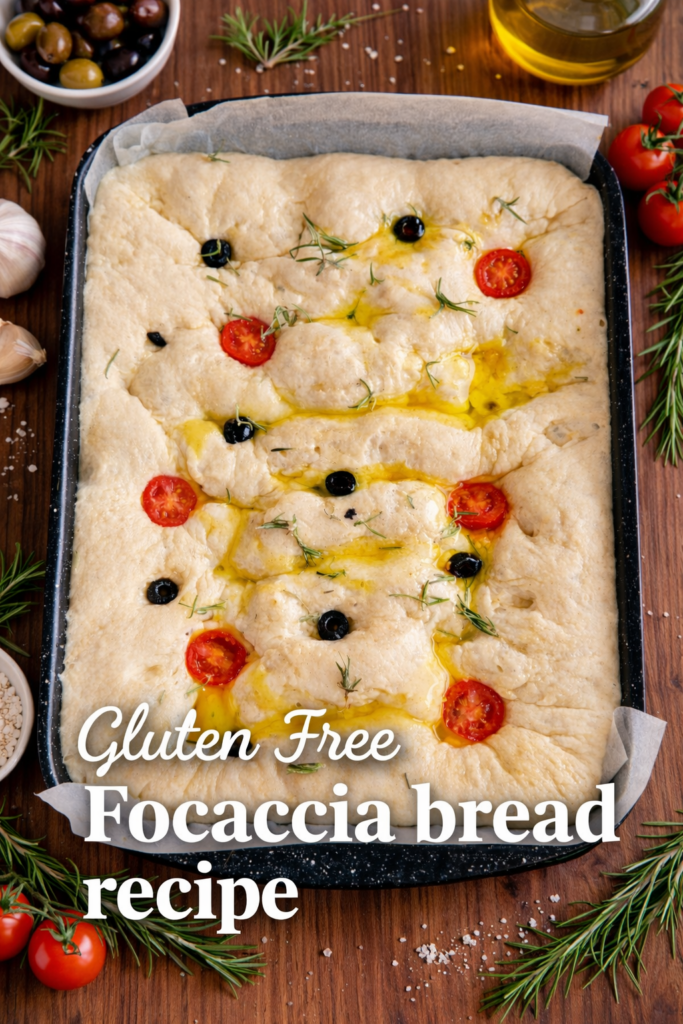
Why You’ll Love This Gluten Free Focaccia
- Soft and airy (not dense or gummy)
- Classic focaccia texture and flavor
- Easy, no knead gluten free dough
- Naturally dairy free
- Perfect for dipping, sandwiches, or brunch
- Made with a trusted gluten free flour blend
Key Ingredients & Why They Matter
- Schär Mix B (500 g)
Designed for yeast breads. It gives structure and softness without extra gums. - Gluten Free Yeast (10 g)
Creates lift and lightness. Make sure it’s fresh. - Warm Water (400 ml)
Gluten-free flours need more water than regular flour. This is the secret to softness. - Olive Oil (2 tsp + extra for topping)
Adds flavor and keeps the crumb tender. - Sugar (1 tsp)
Feeds the yeast (it won’t make the bread sweet). - Salt (a pinch)
Balances flavor and strengthens structure.
Step by Step Instructions (Calm & Clear)
1) Activate the yeast
In a small bowl, mix:
- warm water
- sugar
- yeast
Let it rest 5–10 minutes until foamy on top.
If it doesn’t foam, the yeast is not active.
2) Mix the dough
In a large bowl, add:
- Schär Mix B
- salt
Pour in the yeast mixture and olive oil.
Mix with a spoon or spatula until you get a very soft, sticky dough (almost like thick batter).
Do not add extra flour.
3) First rise
Cover the bowl with a clean towel.
Let rise in a warm place for 45–60 minutes, until visibly puffed.
For the first rise, it’s best to let the dough rest directly in the pan you’ll be baking it in. This helps the dough keep its structure and rise evenly.
4) Shape & dimple
Oil a baking pan generously.
Spread the dough gently into the pan using oiled hands.
Press your fingers lightly to make classic focaccia dimples.
Drizzle olive oil on top.
5) Bake
Bake in a preheated oven at 200°C (390°F) for 25–30 minutes, until:
- lightly golden on top
- edges pull away from the pan
Let cool slightly before slicing.
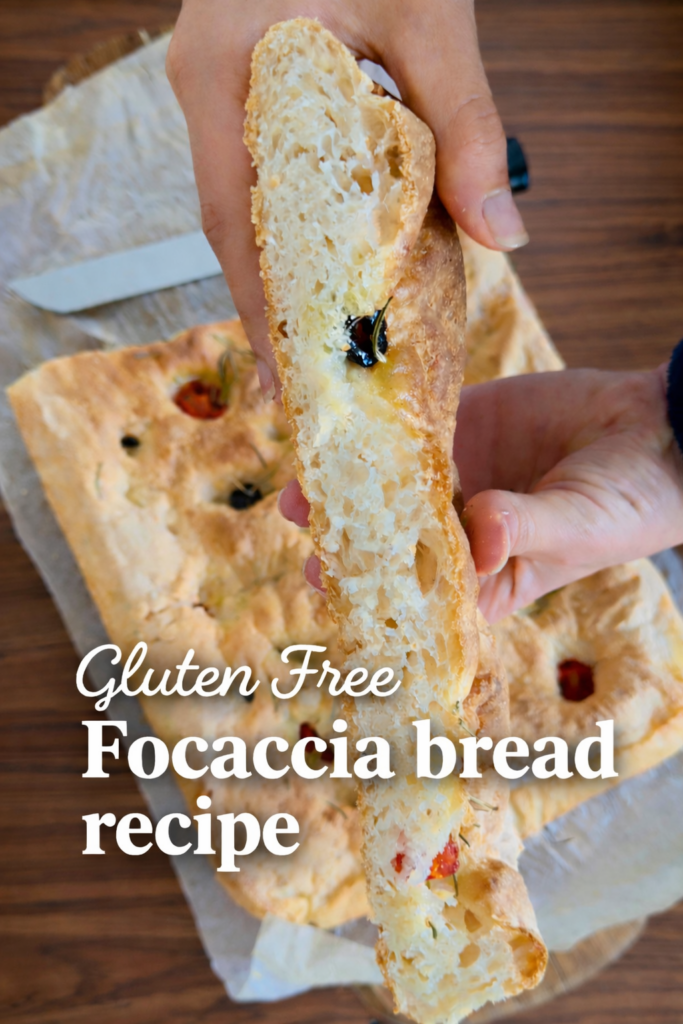
Chef’s Tips for Perfect Gluten Free Focaccia
- Wet dough = soft bread
Gluten free focaccia should never feel firm before baking. - Oil the pan well
This creates a lightly crisp bottom. - Don’t rush the rise
Time builds structure in gluten-free dough. - Warm, not hot water
Hot water kills yeast.
Easy Variations
- Rosemary focaccia: add fresh rosemary before baking
- Garlic focaccia: brush with olive oil + minced garlic after baking
- Olive focaccia: press sliced olives into the dough before baking
- Low salt version: reduce salt slightly and add herbs for flavor
Storage & Freezing
- Store at room temperature (wrapped) for 2 days
- Refrigerate up to 4 days
- Freeze slices for up to 1 month
- Reheat in the oven for best texture
Frequently Asked Questions
Is focaccia bread gluten free?
Traditional focaccia is not gluten free, but this recipe is 100% safe when made with certified gluten-free ingredients.
Why is my gluten-free focaccia dense?
Most often from too little water or inactive yeast.
Can I skip the sugar?
You can reduce it, but yeast works best with a small amount.
Can I use another gluten-free flour?
This recipe is tested with Schär Mix B. Other blends may need adjustments.
Recipe Notes
- Dough texture matters
This gluten free focaccia dough should be very soft and sticky.
Do not add extra flour, this is what keeps the bread light and airy. - Use warm, not hot water
Water should feel warm to the touch, not hot.
Hot water can kill the yeast and stop the bread from rising. - Yeast activation is important
If the yeast does not become foamy after 5–10 minutes, it is not active.
Start again with fresh yeast for best results. - Rising time can vary
In a warm kitchen, the dough may rise faster.
In a cooler room, allow extra time. The dough should look visibly puffy. - Olive oil is part of the texture
Don’t skip the olive oil on the pan and on top.
It helps create the classic focaccia softness and light crust. - Best pan choice
A metal baking pan gives the best structure and bottom texture for gluten free focaccia. - Cooling matters
Let the focaccia cool slightly before cutting so it sets properly inside.
See more Gluten free Baking recipes :
Gluten Free Bagels Recipe | Soft, Chewy & Golden
No-Knead Gluten Free Lentil Bread Rolls (Soft, Easy & Nourishing)
Easy Gluten Free Naan Bread (Soft, Bendy & Delicious!)
Soft & Easy Gluten Free Bread Recipe | 7 Simple Steps
Gluten Free Buns | Soft, Fluffy & Ready in 45 Minutes
Conclusion
This gluten-free focaccia bread is proof that gluten-free baking can be simple, comforting, and beautiful.
With the right hydration, good yeast, and a gentle approach, you get a focaccia that is soft inside, lightly crisp on top, and full of olive oil flavor.
Whether you’re baking for yourself, for family, or for guests who need safe gluten free food, this recipe gives you confidence.
No stress. No disappointment. Just bread that works.
Take your time, trust the dough, and enjoy the process.