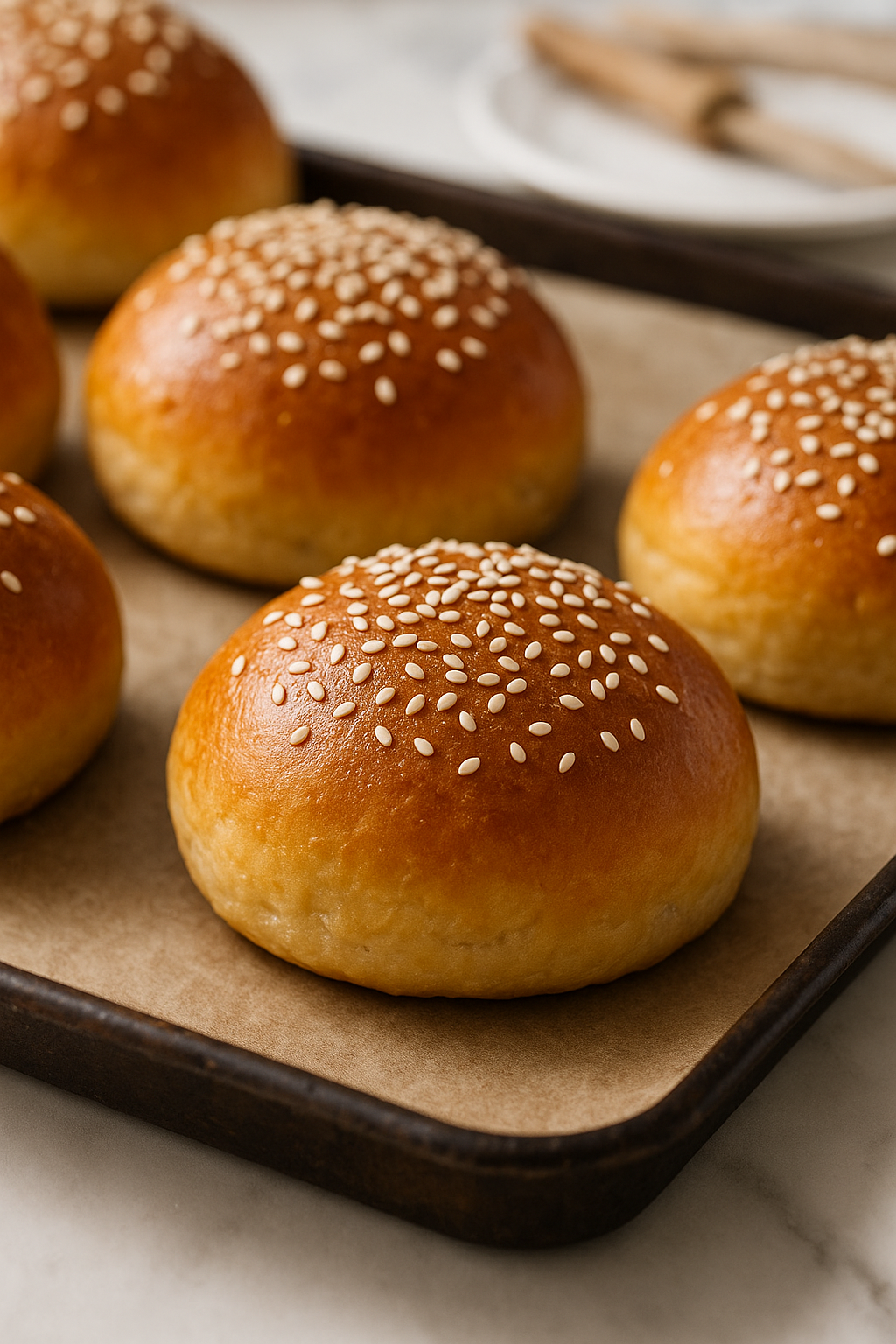
Have you been disappointed by gluten free buns that crumble, taste bland, or feel heavy?
You’re not alone, and you don’t have to settle anymore.
These gluten free buns are soft, airy, and buttery like classic brioche. They’re sturdy enough for juicy burgers yet light enough to enjoy on their own. Every bite feels like comfort and confidence, the way gluten free baking should.

Why You’ll Love These Gluten Free Buns
- Soft, fluffy, and never crumbly
- Light brioche flavor that tastes “real”
- Hold together perfectly with any filling
- Made with wholesome flours (no weird blends)
- Stay fresh for days or freeze beautifully
The Secret to Perfect Gluten Free Buns
The secret lies in psyllium husk gel, which acts like gluten, binding everything and creating that perfect, stretchy dough texture.
Paired with tapioca starch for chew and millet + sorghum flours for flavor, the result is a bun that’s soft on the inside and golden on the outside.
Chef’s note:
Don’t rush the kneading, that extra few minutes makes your dough silky smooth and helps it rise evenly in the oven.
Key Ingredients & Why They Work

Each ingredient in these gluten free buns plays a special role — together, they create a dough that’s soft, elastic, and beautifully balanced. Think of it like a little team, each one doing its part to make every bite tender and golden.
Tapioca Starch
This is your secret to that irresistible chew and gentle bounce. Tapioca starch gives the dough its stretch and elasticity, mimicking what gluten would normally do — helping your buns rise with a light, pillowy crumb that doesn’t fall apart when sliced.
Millet & Sorghum Flours
These two ancient grains are the heart of the flavor. Millet flour adds a delicate sweetness and buttery softness, while sorghum brings a mild, earthy warmth that makes the buns taste “real,” not gluten-free. Together, they build a strong structure without heaviness, giving you that perfect balance between soft inside and golden crust.
Psyllium Husk
The gluten-free world’s best-kept secret. When mixed with water, psyllium forms a gel that binds the dough together, adding flexibility and moisture. It’s what keeps your buns tender on the inside and prevents them from crumbling apart. Think of it as the invisible net holding everything in harmony.
Xanthan Gum
A small but mighty helper. Xanthan gum enhances the dough’s stability, making it easier to shape and ensuring every bun bakes up beautifully round, not flat. It also locks in moisture, giving the finished buns a lovely, non-crumbly texture that stays soft for days.
Eggs & Sunflower Oil
These bring richness, color, and softness. The eggs help the buns puff up in the oven, while the oil keeps the crumb moist and buttery. Together, they create that glossy, golden finish and a tender bite that feels indulgent but light.
Warm Milk
Warm milk softens the dough and adds a subtle creaminess that melts into every bite. It helps the yeast activate fully, giving your buns a beautiful rise and tender crumb. For a dairy-free option, oat or almond milk works perfectly — just as smooth and comforting.
Step by Step Instructions
- Make the psyllium gel: Mix 20 g psyllium husk with 280 g warm water. Let it rest for 30–45 seconds until thick and jelly like.
- Combine dry ingredients: In a large bowl, whisk together tapioca starch, millet flour, sorghum flour, sugar, yeast, baking powder, xanthan gum, and salt.
- Add wet ingredients: Whisk milk, eggs, and oil into the psyllium gel. Pour into the dry mixture.
- Knead: Mix with a stand mixer (or by hand) for 5–8 minutes until smooth and stretchy. The dough should be soft and sticky, don’t add extra flour.
- Shape: Turn onto a floured surface, divide into 8 portions (about 130 g each), and roll into smooth balls.
- Proof: Place on a lined tray, cover lightly with plastic wrap, and let rise until doubled (about 1 hour 15 minutes).
- Bake: Brush with whisked egg, sprinkle sesame seeds, and bake at 190 °C (375 °F) for 14–15 minutes, until golden brown.
- Cool: Transfer to a wire rack. Enjoy warm, or let cool completely before storing.

Chef’s Tips for Success
- Don’t over flour, soft dough = soft buns.
- If the dough feels too sticky, chill it for 1 hour before shaping.
- For a shiny top, always brush with egg wash before baking.
- Bake on a hot baking steel or stone for that bakery-quality crust.
- Proof in a warm, humid space (a cup of hot water in your oven works wonders).
Variations & Dietary Options
- Dairy Free: Use almond or oat milk instead of cow’s milk.
- Egg Free: Replace eggs with 2 flax eggs (1 tbsp flax + 3 tbsp water each).
- Mini Sandwich Rolls: Divide dough into 12 small buns and reduce bake time to 10 minutes.
Storage & Freezing
- Store in an airtight container at room temperature for 3–4 days.
- Freeze for up to 2 months. Thaw at room temperature or reheat for 5 minutes at 160 °C (320 °F).
- Toast before serving for that perfect crisp edge and soft center.
Frequently Asked Questions
Can I skip psyllium husk?
No, it’s the key to softness and structure. Without it, buns will be dense.
Why did my buns turn out heavy?
Too much flour or too little kneading. The dough should feel soft and elastic.
Can I make the dough ahead?
Yes! Chill overnight, then proof for 90 minutes the next day before baking.
What’s the best flour mix?
The millet sorghum tapioca combo gives the best flavor and texture balance.
Chef’s Note
When I first started making gluten free buns, I wanted one that felt normal, soft, light, and perfect for a burger night with friends. This recipe became my go to because it never fails: the dough is easy to handle, the crust turns golden, and the inside stays pillowy every time. Trust the process, even if the dough feels sticky at first, it’s the secret to that bakery style softness.
Serving Suggestions
- Perfect for burger night, holds up to juicy patties.
- Slice for breakfast sandwiches with eggs or avocado.
- Great with GF Snack’s Gluten Free Chicken Nuggets or Crispy Egg Noodles for a full comfort meal.
See more Gluten free Recipes :
Gluten Free Chicken Nuggets | Crispy, Easy & Family Approved
Gluten Free Gnocchi | Soft, Pillowy & Easy to Make
Gluten Free Sweet Corn Soup (Easy, Creamy & Comforting)
Easy Gluten Free Stuffing Recipe (Crispy, Moist & Full of Flavor!)
The Secret to Perfect Gluten Free Buns
The magic behind these gluten free buns isn’t luck, it’s understanding how each step builds that soft, cloud-light texture you’ve been missing.
The true secret begins with the psyllium gel. When psyllium husk meets warm water, it transforms into a smooth, jelly like mixture that mimics gluten’s stretch and strength. This humble step is what gives your dough its life, flexibility, moisture, and the structure it needs to rise tall without collapsing.
Next comes the balance of flours. Tapioca starch gives that satisfying chew, while millet and sorghum bring flavor and warmth. Together, they create a dough that’s stable enough to shape, yet soft enough to stay tender after baking. It’s this combination, plus patience and gentle handling, that makes the difference between a heavy bun and one that’s delightfully airy.
Kneading is where the magic deepens. Unlike traditional bread dough, gluten free doughs thrive on consistent mixing rather than intense kneading. Those extra minutes in the mixer allow every grain to hydrate fully and the psyllium network to form evenly, producing a silky, elastic dough that bakes into a glossy, golden masterpiece.
And finally, proofing, the quiet stage that builds texture and flavor. A warm, slightly humid space lets the yeast work slowly and evenly, filling each bun with tiny air pockets for that beautiful rise.
Chef’s tip: Don’t rush the process. Give the dough time to rest, to rise, and to breathe. Gluten-free baking rewards patience, and your first soft, buttery bite will prove it.
Conclusion
These gluten free buns are soft, golden, and beautifully reliable, the kind of recipe that brings back the joy of burger nights and homemade sandwiches. Each bite is proof that gluten free baking can be simple, delicious, and genuinely satisfying. Keep this one close, it’s a recipe you’ll return to again and again.